

The gaming industry has seen exponential growth over the past decade, driven by technological advancements, consumer demand, and the ever-evolving nature of interactive entertainment. Gamers and developers alike are continuously seeking innovative ways to enhance gameplay, graphics, realism, and interactivity. As such, many enthusiasts are asking: what is new in gaming technology jogametech, seeking to understand the latest breakthroughs and how they reshape the gaming landscape.
The Evolution of Gaming Technology
To understand what is new in gaming technology jogametech, it is essential to first consider the evolution of gaming itself. Video games have transitioned from simple 2D pixelated experiences to complex 3D worlds featuring photorealistic graphics, advanced physics engines, and intricate artificial intelligence.
Early consoles and arcade machines provided foundational experiences, focusing primarily on entertainment and competition. Over time, developments in computer hardware, graphics processing, and digital storage allowed for increasingly sophisticated gameplay, resulting in immersive virtual environments and interactive storytelling. Today, gaming is not only a recreational activity but also a competitive sport, an educational tool, and a platform for social interaction.
Hardware Innovations Driving Modern Gaming
One of the most significant areas of advancement in gaming technology lies in hardware development. The introduction of high-performance graphics cards, faster processors, and advanced memory systems has enabled developers to create expansive game worlds, realistic character models, and dynamic environments.
Modern consoles such as next-generation PlayStation and Xbox systems leverage cutting-edge CPUs and GPUs, delivering performance that was unimaginable a few years ago. Similarly, gaming PCs now feature ray-tracing graphics, which simulate the behavior of light in real time, providing unprecedented realism.
Peripheral devices have also evolved, enhancing the gaming experience. High-refresh-rate monitors, haptic-feedback controllers, virtual reality headsets, and specialized gaming chairs all contribute to immersion and performance. When considering what is new in gaming technology jogametech, these hardware advancements are central to understanding the capabilities and limitations of modern gaming systems.
Virtual Reality (VR) and Augmented Reality (AR)
Virtual Reality (VR) and Augmented Reality (AR) are among the most transformative technologies in modern gaming. VR immerses players in a fully interactive digital environment, while AR overlays digital elements onto the real world. Both technologies offer unique opportunities for gameplay innovation, storytelling, and user engagement. tgarchivegaming tech news from thegamearchives
Leading VR platforms now provide high-resolution displays, spatial audio, and sophisticated motion tracking, enabling gamers to interact with virtual worlds in ways previously impossible. AR games, often accessible via smartphones and specialized headsets, blend real-world exploration with digital challenges, offering a new layer of interactivity.
When exploring what is new in gaming technology jogametech, VR and AR remain central. Developers are creating games that leverage these technologies to provide novel experiences, from immersive simulations to competitive multiplayer arenas.
Cloud Gaming and Streaming Platforms
Cloud gaming has emerged as a significant development in gaming technology, allowing users to play high-quality games without owning powerful hardware. Services such as Google Stadia, NVIDIA GeForce Now, and Xbox Cloud Gaming stream games directly from remote servers to devices, reducing the need for expensive consoles or PCs.
Cloud gaming addresses accessibility, enabling gamers to enjoy advanced titles on smartphones, tablets, or low-spec computers. Moreover, cloud infrastructure allows developers to update games instantly, providing smoother patches and faster content delivery.
This trend is central when analyzing what is new in gaming technology jogametech, as cloud gaming represents a shift in how games are distributed, accessed, and monetized. By reducing hardware dependency, it democratizes gaming and expands the potential audience for developers.
Artificial Intelligence in Gaming
Artificial intelligence (AI) has revolutionized both game development and player experience. AI-driven algorithms control non-player characters (NPCs), create adaptive difficulty levels, and even generate dynamic storylines.
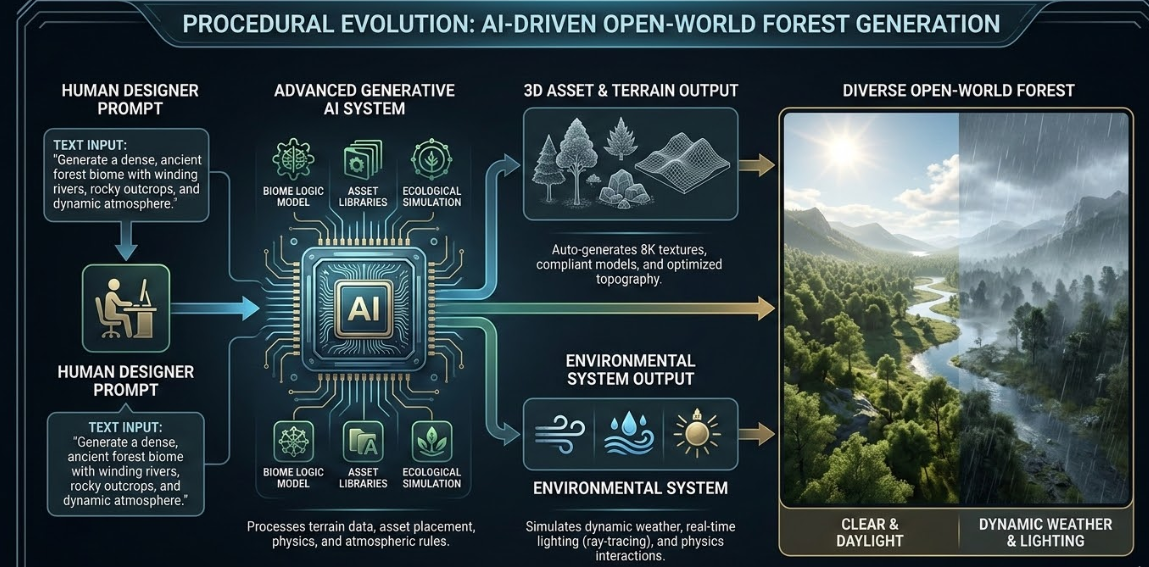
Machine learning models allow games to adapt to individual player styles, enhancing engagement and replayability. Additionally, AI assists developers in procedural content generation, creating expansive worlds and environments efficiently without manual design for every element.
When considering what is new in gaming technology jogametech, AI is a crucial component, powering innovations that were previously thought impossible. Its integration continues to redefine both the scope and depth of interactive entertainment.
Multiplayer and Social Gaming
Modern gaming technology also emphasizes connectivity, creating a social dimension to interactive entertainment. Multiplayer games, online communities, and esports platforms allow players to compete, collaborate, and communicate globally.
Advances in networking technology, including faster broadband, lower latency servers, and optimized matchmaking algorithms, enhance the multiplayer experience. Games such as Fortnite, Call of Duty, and Apex Legends exemplify how technology enables global participation and social interaction.
This evolution is particularly relevant to discussions of what is new in gaming technology jogametech, as it highlights the integration of social infrastructure with gaming systems, fostering both competitive and cooperative communities.
Mobile Gaming Innovations
Mobile gaming continues to grow rapidly, powered by increasingly powerful smartphones and tablets. Modern mobile devices feature advanced processors, high-resolution screens, and haptic feedback, allowing developers to create complex, console-quality experiences.
Augmented reality (AR) mobile games, location-based gaming, and cross-platform integration have further enhanced the mobile experience. Players can now enjoy multiplayer sessions, real-time strategy games, and immersive RPGs directly on handheld devices.
Considering what is new in gaming technology jogametech, mobile innovations reflect a shift toward portability and accessibility, expanding gaming’s reach to broader demographics and geographies.
The Role of Gaming Engines
Game engines such as Unreal Engine, Unity, and CryEngine have significantly impacted gaming development. These platforms provide developers with prebuilt frameworks for graphics, physics, AI, and sound, accelerating production while maintaining high-quality standards.
Recent engine updates incorporate real-time ray tracing, advanced animation, and cross-platform compatibility. This allows developers to build visually stunning and highly interactive experiences across consoles, PCs, and mobile devices.
In understanding what is new in gaming technology jogametech, game engines represent both a creative tool and a technological foundation, facilitating innovation while standardizing development processes.
Emerging Technologies: Haptics and Sensory Feedback
Beyond visuals and gameplay mechanics, immersive sensory technologies are increasingly shaping gaming experiences. Haptic feedback, adaptive triggers, and motion-sensitive controllers allow players to “feel” in-game actions, enhancing engagement and realism.
Innovations in sensory feedback extend to VR gloves, treadmills, and motion suits, enabling full-body interaction in virtual environments. These technologies are becoming critical for competitive gaming, simulation training, and immersive storytelling.
When evaluating what is new in gaming technology jogametech, sensory innovations highlight the industry’s push toward fully engaging, multi-sensory experiences that redefine how players interact with digital worlds.
Esports and Competitive Gaming
Esports represents a significant convergence of technology, culture, and professional competition. Advances in streaming, analytics, and spectator engagement have transformed competitive gaming into a global phenomenon.
Players rely on high-performance hardware, low-latency networks, and performance analytics to compete at elite levels. Esports tournaments, online leagues, and live broadcasts demonstrate how gaming technology impacts not only gameplay but also entertainment and media industries.
For anyone exploring what is new in gaming technology jogametech, esports illustrates how technological progress drives new forms of interaction, competition, and community formation within gaming culture.
Gaming Accessibility Innovations
Inclusivity and accessibility have become priorities in modern gaming technology. Developers now incorporate features like customizable controls, color-blind modes, voice commands, and assistive devices to ensure broader participation.
These accessibility innovations are increasingly integrated into mainstream titles, making gaming more inclusive for players with disabilities or varying physical capabilities. Such developments are central to understanding what is new in gaming technology jogametech, as they reflect industry trends toward equity and user-centered design.
Sustainability in Gaming Technology
As gaming grows, environmental considerations have gained prominence. Companies are developing energy-efficient consoles, recycling programs, and cloud-based solutions to reduce carbon footprints. Developers also optimize game engines to consume less power while maintaining high-quality performance.
Sustainability initiatives in hardware production, energy-efficient servers, and digital distribution methods demonstrate the gaming industry’s commitment to environmental responsibility, reflecting broader technological trends.
Conclusion
The landscape of gaming technology is evolving rapidly, driven by innovations in hardware, software, connectivity, and user experience. From VR and AR to AI, cloud gaming, and mobile innovations, these advancements are reshaping how people play, interact, and experience digital entertainment.
Understanding what is new in gaming technology jogametech provides valuable insights for gamers, developers, and industry observers. It highlights the intersection of creativity, technical innovation, and consumer engagement, demonstrating how modern gaming continues to push boundaries and expand possibilities.
By keeping abreast of emerging trends, embracing new technologies, and exploring immersive experiences, players and professionals can fully engage with the evolving world of gaming. As the industry grows, technologies will continue to enhance realism, interactivity, and accessibility, ensuring that the future of gaming remains dynamic, innovative, and inclusive.









Leave a Reply